Why Customer Experience Matters More Than Ever
Think about the last time you picked one business over
another.
Maybe both had similar products.
Maybe prices were almost the same. So, what made you choose one?
Sometimes the answer isn’t the product or the price.
It’s just how the business made you feel.
Today, customers have more choices than ever.
With just a few clicks, they can look at products, compare prices, see reviews,
check services, and even read about how customers feel about a business. If
they don’t like what they see or how they are treated, switching to another
business is easy.
That’s why customer experience is more important now than
ever.
A good product can catch a customer’s interest, but a good
experience can make them stay.
What Is Customer Experience?
Customer experience is basically how a customer feels about
your business after they interact with it.
And that interaction starts before the purchase.
It can begin when someone sees your Instagram post, visits your website, reads
a review, calls your team, or sends a message asking a simple question.
Then comes the actual purchase, delivery, communication,
support, and everything that happens after that.
Each of these moments affects how the customer sees your
business.
For example, imagine a customer finds your company online.
Your website is easy to use, your team responds fast, communication is clear,
and any problem is handled without delays.
That customer is likely to remember the experience in a good
way.
But what happens if the website is confusing, no one answers
the message, or the customer has to explain the same issue to three different
people?
Even if your product is great, the customer might still
leave feeling unsatisfied.
That’s the real effect of customer experience.
Why Does Customer Experience Matter So Much ?
1. Customers Have More Choices
Customers aren’t limited to local businesses anymore.
The internet has given them access to hundreds of options.
If one company doesn’t meet their needs, finding another option can take just a
few minutes.
This puts pressure on businesses to do more than just sell.
Customers want convenience.
They want clear communication.
They want fast responses.
Most importantly, they want to feel that their needs really matter.
When a business consistently gives that kind of experience,
customers have a reason to come back.
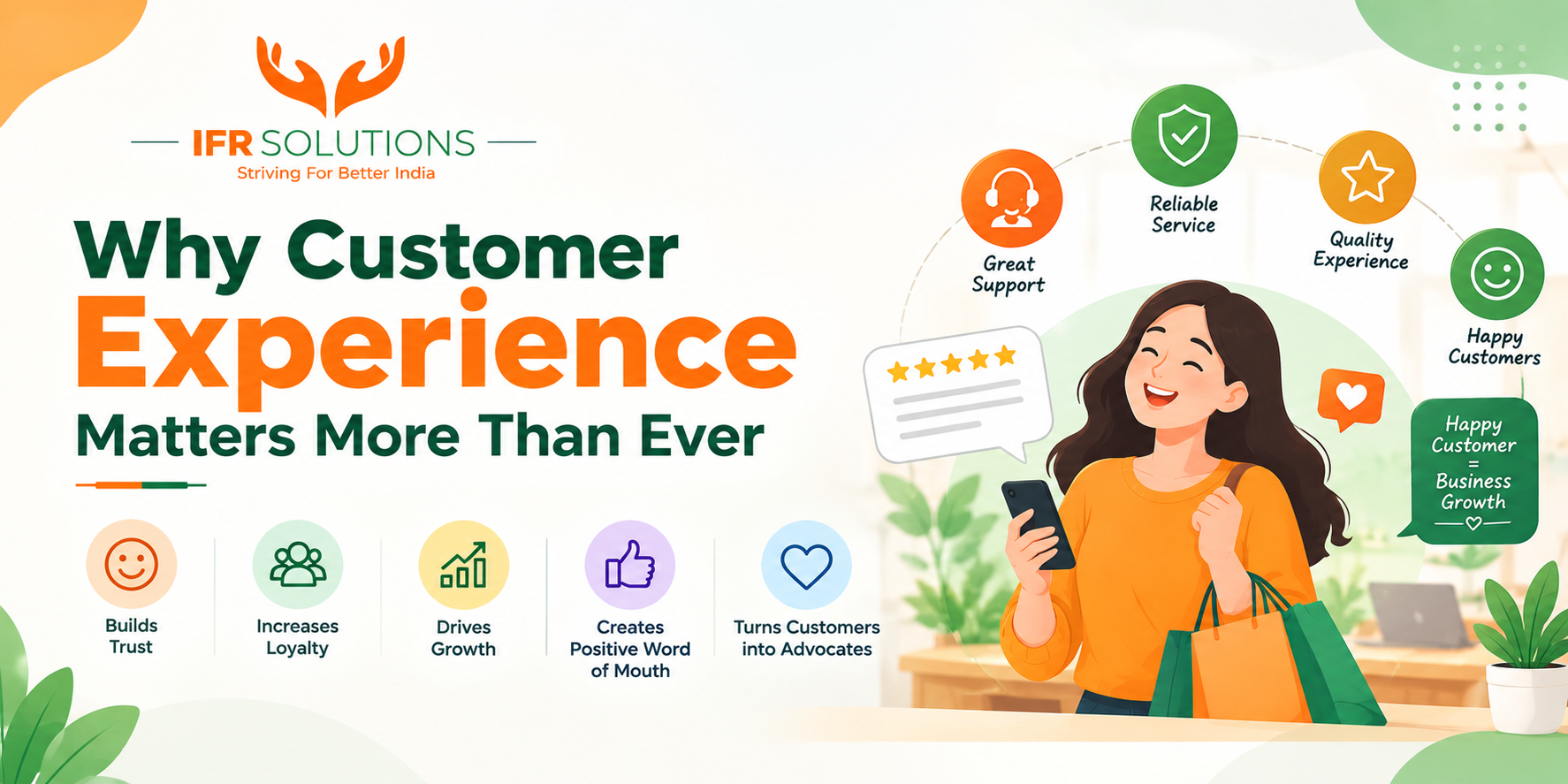
2. Good Experiences Build Loyalty
Customer loyalty doesn’t happen overnight.
It grows when customers keep having good experiences with a
business.
Think about your own habits.
You might keep buying from a brand even if another company offers a slightly
cheaper price.
Why?
Because you already know what to expect.
You trust the brand.
You know their service is reliable.
You know that if something goes wrong, someone will help you.
That trust is valuable.
A strong customer experience can turn a first-time buyer
into a regular customer—and eventually, into someone who recommends your
business to others.
3. Customers Talk About Their Experiences
People talk.
They tell friends about businesses they like.
They leave reviews.
They share their experiences on social media.
And they also talk about businesses that let them down.
A positive experience can encourage someone to recommend
your brand without you spending anything on advertising.
But a poor experience can have the opposite effect.
That’s why every interaction matters.
A simple conversation with a customer can influence not only that customer’s
opinion but also the opinions of others.
Customer Experience Can Set Your Business Apart
Let’s be honest—products can be copied.
Competitors can offer similar prices.
They can create similar offers and promotions.
But creating a truly good customer experience is much harder
to copy.
Imagine two businesses selling almost the same product at
almost the same price.
The first business responds quickly, listens carefully,
communicates clearly, and solves problems without making the customer run
around.
The second business takes days to reply and keeps moving the
customer from one person to another.
Which one would you choose?
Most people would choose the first.
That’s why customer experience can become one of your
strongest competitive advantages.
Your Employees Matter Too
You can have a great website, a cool product, and good
technology.
But if your employees aren’t good with customers, the whole
experience might still be bad.
Your employees are the people customers talk to directly.
The way they talk, listen, and handle tough situations can
make a big difference.
That’s why your employees should know how to:
- Listen
instead of cutting people off
- Understand
what the customer really needs
- Speak
in a simple and respectful way
- Answer
in a professional way
- Show
care when a customer has a problem
- Take
responsibility, not pass the problem around
- Focus
on finding real solutions
A customer-friendly employee isn’t just trying to finish a
task.
They’re trying to make things easier for the customer.
Why Fast Responses Matter
No one likes being ignored.
When customers ask a question or have a problem, they expect
someone to respond.
They don’t always want an instant answer, but they do want to know someone is
paying attention.
Even a small message like, “We’ve received your request and
our team is looking into it,” can help a lot.
It shows the customer that their concern is being taken
seriously.
Quick and clear communication makes customers feel
respected.
It shows they matter to your business.
The Experience Doesn’t End After the Sale
A big mistake some businesses make is thinking the customer
journey ends when payment is done.
It doesn’t.
What happens after the sale can be just as important.
A follow-up, helpful advice, easy support, or checking in to
see if everything is working can make customers feel appreciated.
When customers know a company is there after the sale, they
are more likely to trust it and come back.
In short, customer retention isn’t just about what you sell.
It’s also about how you treat customers after they buy.
How Can You Improve Customer Experience ?
The good news is that you don’t always need expensive
software or complicated plans to improve customer experience.
Sometimes, small changes can make a big difference.
Related News