How to Convert Leads into Customers
Getting leads is exciting.
Someone fills out your contact form. Someone sends a WhatsApp message. Someone asks for your price. Someone calls your business and wants to know more about your service.
At that moment, it feels like you have a potential customer.
But here’s the real challenge: getting a lead is not the same as getting a customer.
A lot of businesses spend time and money generating leads, but they struggle when it comes to converting those leads into actual buyers.
Why does this happen?
Sometimes the business responds too late. Sometimes the salesperson talks too much and listens too little. Sometimes there is no proper follow-up. And sometimes the customer simply doesn’t understand why they should choose that particular business.
The good news is that lead conversion can be improved.
You don't always need more leads. Sometimes, you simply need to do a better job with the leads you already have.
What Does It Mean to Convert a Lead into a Customer?
A lead is someone who has shown some level of interest in your business.
They might have:
Filled out a form on your website
Called your business
Sent a WhatsApp message
Asked for a quotation
Responded to an advertisement
Signed up for a service
Requested a product demo
Sent a message on social media
But interest alone doesn't mean they're ready to buy.
Lead conversion is the process of taking that initial interest and turning it into a purchase or a confirmed business relationship.
Think of it as a journey.
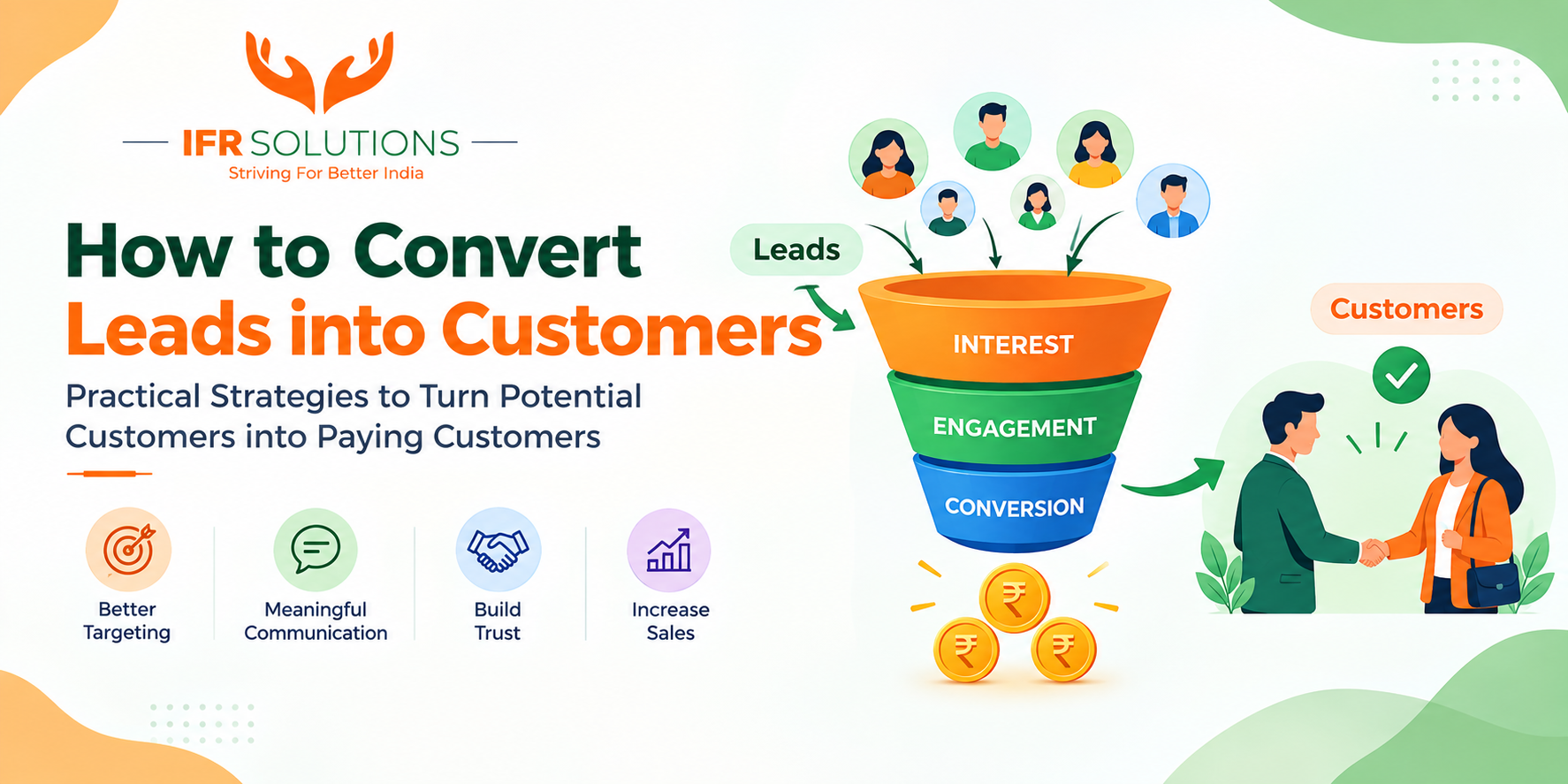
Lead → Conversation → Trust → Solution → Decision → Customer
Your job is to make that journey easier for the customer.
Why Do Some Leads Never Become Customers?
Before talking about conversion strategies, it's worth understanding why leads disappear in the first place.
One common reason is slow communication.
Imagine someone is interested in your service and sends you a message. They don't hear back for two days. By then, they may have already contacted three competitors.
Another reason is poor communication.
If a salesperson immediately starts talking about prices, packages, and features without understanding what the customer actually needs, the conversation can feel more like a sales pitch than a helpful discussion.
Then there is the follow-up problem.
A customer might be interested but not ready to make a decision today. If you stop contacting them after one conversation, you may lose a potential sale that could have happened later.
And sometimes the problem is simply a lack of trust.
Customers want to know that they're making the right decision before spending their money.
This is where a good lead conversion strategy makes a difference.
1. Respond to Leads Quickly
When someone shows interest, timing matters.
The longer you wait to respond, the more likely that lead is to lose interest or contact another business.
This doesn't mean you need to provide a long answer immediately.
Even a simple response can keep the conversation moving.
For example:
"Hi, thanks for reaching out. I’ve received your enquiry and would be happy to understand your requirements. Can we have a quick conversation?"
It's simple, but it tells the customer that someone is paying attention.
Fast responses create a better first impression and show that your business takes enquiries seriously.
2. Understand What the Customer Actually Needs
One of the biggest mistakes in sales is trying to sell before understanding the customer.
Don't assume you already know what they want.
Ask questions.
What problem are they trying to solve?
What are they currently using?
What result are they expecting?
What is most important to them?
When do they want to get started?
The answers will help you understand whether your product or service is actually the right fit.
And there's another benefit.
When customers feel that you're genuinely trying to understand their situation, they are usually more comfortable continuing the conversation.
Listen More Than You Talk
Good sales conversations aren't one-sided.
You don't need to spend ten minutes explaining everything about your company.
Sometimes, the best thing you can do is listen.
Let the customer explain their situation. Pay attention to the words they use. Ask relevant questions.
Then use what you've learned to explain how your product or service can help.
That's much more effective than giving every lead the same sales pitch.
3. Focus on the Customer's Problem
Customers don't buy products simply because a business has them.
They buy because they believe the product or service will help them solve a problem, save time, reduce effort, make money, improve something, or achieve a particular result.
So instead of only talking about what your product does, explain why it matters to the customer.
For example, instead of saying:
"We provide digital marketing services."
You could say:
"We help businesses generate more relevant leads through digital marketing and turn those opportunities into potential customers."
The second statement focuses more on the customer's goal.
That's what your sales conversation should do.
4. Build Trust Before Asking for the Sale
People don't like feeling pressured into buying something.
They want to feel confident about their decision.
That's why trust plays such an important role in lead conversion.
You can build trust by showing:
Customer reviews
Testimonials
Case studies
Previous work
Product demonstrations
Clear information
Real examples
Transparent pricing
Helpful answers
If a customer has doubts, don't try to rush past them.
Address them honestly.
Sometimes saying, "This may not be the right option for your requirement" can build more trust than trying to sell something that isn't a good fit.
5. Personalize Your Communication
Nobody likes receiving a message that feels copied and pasted.
If you've already spoken to a lead, use what you learned from that conversation.
For example:
"Hi Amit, you mentioned that your main goal is to increase enquiries from your website. I wanted to share an approach that could help with that."
This feels very different from:
"Hello Sir, we are offering the best digital marketing services. Contact us today."
Personalization doesn't have to be complicated.
Just show the customer that you remember their requirement and understand what they're looking for.
6. Follow Up Without Being Pushy
Not every lead will buy during the first conversation.
Some need time to compare options. Some need to speak with a partner or manager. Some are interested but have other priorities at the moment.
That's normal.
This is why follow-up is so important.
But there is a difference between following up and annoying someone.
Don't send the same:
"Sir, any update?"
every day.
Instead, make your follow-up useful.
You could share additional information, answer a question, send a case study, explain an important benefit, or simply ask whether they still need help with the requirement.
A good follow-up gives the customer a reason to continue the conversation.
7. Learn to Recognize Buying Signals
Customers often give small signs when they are getting closer to making a decision.
These are called buying signals.
For example, a lead might ask:
"What is the final price?"
"How soon can we start?"
"What is included in this package?"
"Do you provide support after purchase?"
"Can you send me the proposal?"
"What payment options are available?"
These questions usually show that the customer is thinking seriously about the purchase.
When you notice these signals, don't keep giving unnecessary information.
Guide the conversation toward the next step.
That next step could be a demo, proposal, meeting, payment, trial, or order confirmation.
8. Handle Customer Objections Properly
Objections don't always mean "no."
Sometimes they simply mean:
"I need more information before I feel comfortable saying yes."
A customer might say:
"Your price is too high."
Instead of immediately offering a discount, try to understand why they feel that way.
You could say:
"I understand. Can I ask what you're comparing our pricing with? I can explain what's included so you can make a fair comparison."
This opens a conversation instead of creating an argument.
Common objections include:
Price
Timing
Lack of trust
Comparing competitors
Need for approval
Uncertainty about results
Lack of information
Handle these concerns calmly and honestly.
9. Make the Buying Process Easy
Imagine a customer has finally decided to buy from you.
Then they have to fill out a long form, wait for a response, ask for payment details, and speak to three different people before completing the purchase.
That creates unnecessary friction.
Make the process simple.
Give customers clear information about:
What happens next
Pricing
Payment methods
Required documents
Delivery or service timelines
Support
Contact information
The easier it is to buy, the fewer opportunities there are for the customer to change their mind.
10. Don't Forget About Leads After the Sale
Your relationship with a customer shouldn't end after payment.
In fact, what happens after the sale can influence whether they buy from you again.
A simple follow-up can go a long way.
Ask whether everything is going well.
Offer help if they have questions.
Share useful information when appropriate.
Thank them for choosing your business.
These small actions can improve the customer experience and increase the chances of repeat business and referrals.
Use a CRM to Keep Track of Leads
If you're handling only a few leads, you may be able to manage everything manually.
But as your business grows, things can easily get missed.
A CRM can help you keep track of:
New leads
Contact details
Lead source
Previous conversations
Follow-up dates
Customer requirements
Sales stage
Proposals
Conversion status
The important thing isn't simply having a CRM.
It's actually using the information inside it.
Your team should know which leads need attention and what the next step should be.
Measure Your Lead Conversion Rate
You can't improve what you don't measure.
One useful metric is your lead conversion rate.
For example, if you receive 500 leads and 25 become customers:
Lead Conversion Rate = (25 ÷ 500) × 100 = 5%
Tracking this number over time can help you understand whether your sales process is improving.
You can also look at conversion rates by lead source.
Maybe your website generates 100 leads and 10 customers, while social media generates 200 leads but only 4 customers.
That tells you something important.
More leads don't necessarily mean more customers.
Sometimes better-quality leads are more valuable than a larger number of leads.
Create a Simple Lead Conversion Process
You don't need a complicated sales system to get started.
A simple process could look like this:
1. Generate the lead
Bring potential customers through your website, social media, advertising, referrals, SEO, or other channels.
2. Respond quickly
Acknowledge the enquiry and start the conversation.
3. Qualify the lead
Find out whether their needs match your product or service.
4. Understand the problem
Ask questions and listen carefully.
5. Present the right solution
Explain how your offering can help solve their specific problem.
6. Build confidence
Use testimonials, examples, demonstrations, and clear information.
7. Follow up
Stay connected and provide useful information.
8. Close the sale
When the customer is ready, make the next step clear and easy.
9. Follow up after the sale
Make sure the customer is satisfied and supported.
Final Thoughts
Converting leads into customers isn't about pushing people into buying.
It's about helping the right people make the right decision.
Respond quickly. Ask good questions. Listen carefully. Understand the customer's problem. Explain your value clearly. Build trust. Follow up consistently and make the buying process easy.
Most importantly, remember that every lead is a person.
They have questions, concerns, expectations, and reasons for choosing one business over another.
When you focus on helping instead of simply selling, your conversations become more natural, your customers feel more comfortable, and your chances of converting leads into customers become much stronger.
Related News